

We Are Unmuted: Claiming Space with Roshaun Davis
On this episode of We Are Unmuted, we sat down with Roshaun Davis, a Sacramento-based creative, community builder, and cultural strategist whose work lives at the intersection of creativity, equity, and ownership. From launching a creative agency out of a hip‑hop tour bus to reimagining community development through culture-first systems, Roshaun shares what it really looks like to build authentically, and unmuted.
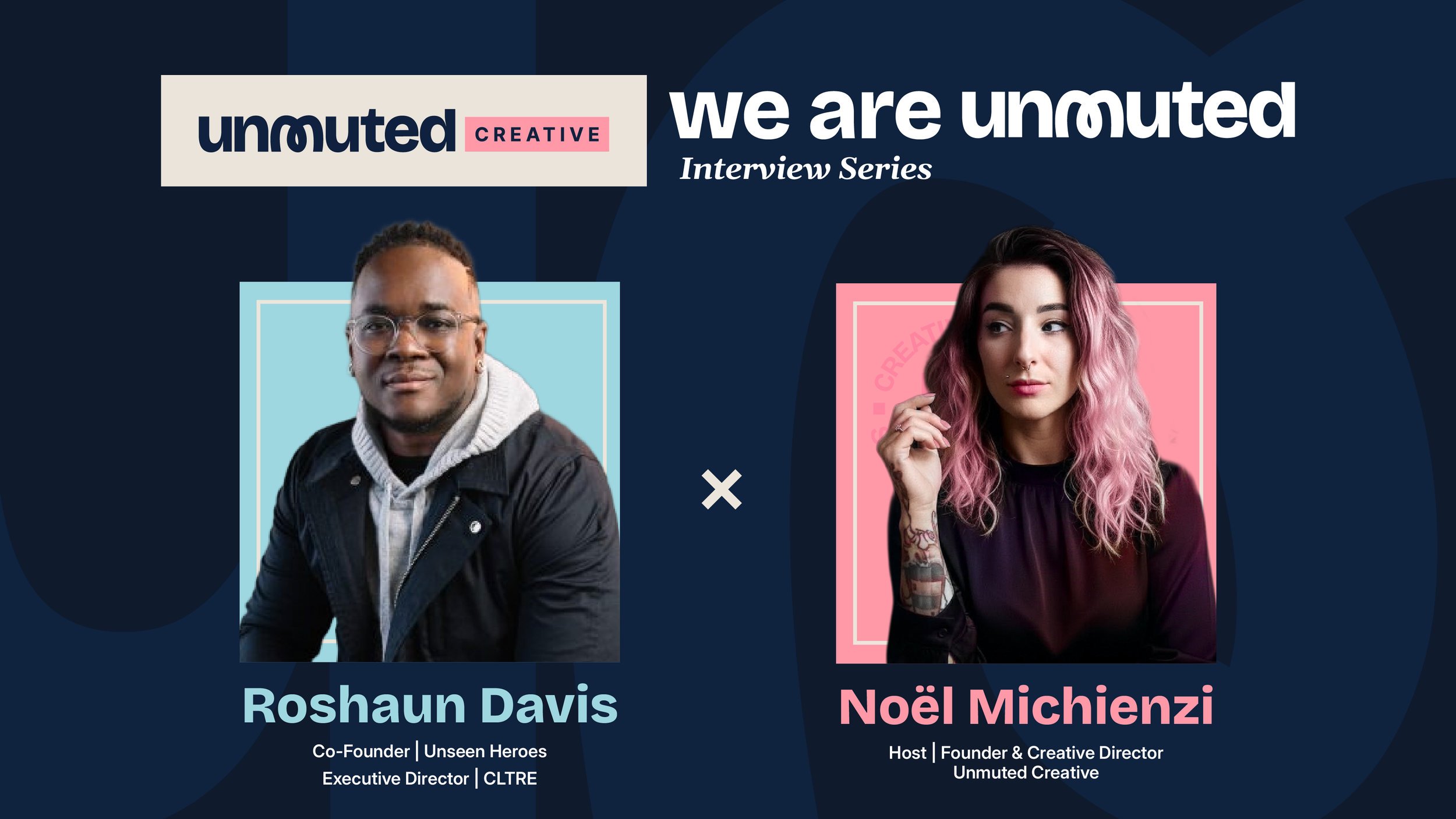
Watch the full interview on our YouTube channel to follow every We Are Unmuted interview.
Q&A with Roshaun Davis
Noël: For those who may not know you yet…who are you, and what do you do?
Roshaun:
At my core, I’m just a creative; a non‑traditional person who’s always danced to the beat of my own drum. That’s been true since I was a kid, long before any professional titles or accolades. Creativity is deeply connected to spirituality for me, so those two things really ground everything I do.
I’m also a father, that’s the heartbeat of my life. I have three boys across a wide age range, so my days are full of different perspectives, emotions, and responsibilities. Family is everything to me.
Professionally, I use my creativity to help people, neighborhoods, and ideas get to where they’re trying to go. When you put all of that together — creativity, spirituality, family, and service — that’s me in a nutshell.
Noël: You’re currently leading CLTRE, a community development organization. What is CLTRE, and why did you start it?
Roshaun:
CLTRE is a community development corporation that we started during the pandemic, because apparently that’s when you’re supposed to start something new (lol).
What we focus on is what I call soft infrastructure. When people talk about development, they usually think about buildings, or the built environment. But community development lives in the middle: the people, the culture, the small businesses, the third spaces, and the emotional experience of living in a place.
We ask questions like:
How do people feel when new development comes in?
How do we prevent displacement?
How do we bring the community along instead of building over them?
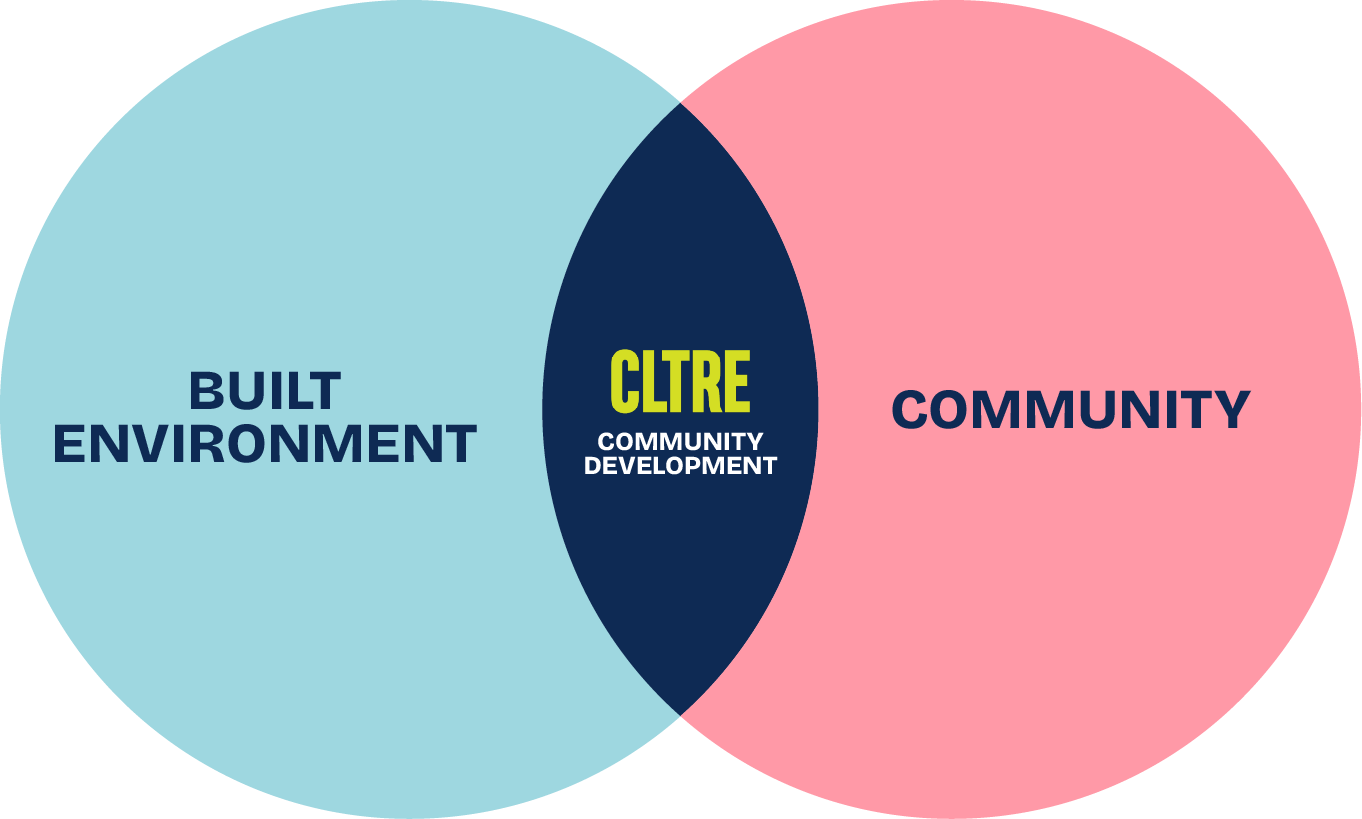
If you imagine a Venn diagram — the built environment on one side, the community on the other — community development is the overlap. CLTRE exists to make sure that overlap actually works.
Noël: How do you actually engage communities in that work?
Roshaun:
It starts with conversations. A lot of conversations.
I genuinely love people, so it’s easy for me to walk up, ask questions, and be curious. I operate from the belief that everyone has something valuable to contribute. When you truly believe that, every interaction becomes a bridge (even if that bridge doesn’t connect for months or years).
Sometimes it’s formal engagement. Sometimes it’s going to events. Sometimes it’s literally asking someone at a gas station what they think about a logo or a color. You get more honest insight that way than from a survey form.
Being present, inquisitive, and open creates authentic connection — and that’s where real community work happens.
Noël: Do you remember the first small business client that really shifted things for Unseen Heroes?
Roshaun:
Absolutely — Hot Italian.
Andrea was more than a client; she was a mentor. She pushed us to operate at a higher standard and think differently about marketing, events, and community engagement.
Working with her taught us professionalism without sacrificing creativity. We helped execute festivals, outdoor events, and campaigns that helped shape Sacramento’s cultural moment at the time.
That experience taught us how to build things that last.
Noël: You’ve talked about culture being created by people who often don’t benefit from it financially. How does CLTRE address that?
Roshaun:
Historically, the people who shift culture don’t own the assets. They create the energy, the vibe, the moment, and then get priced out.
Our goal is to change that.
If creators, small businesses, and community leaders can stay rooted in place — if they can own something — then culture becomes sustainable. It creates legacy instead of extraction.
Equitable development isn’t just morally right — it actually produces stronger, longer‑lasting communities.
Noël: We’re living through massive shifts like COVID, digital acceleration, AI. How do you see that impacting communities?
Roshaun:
We’re living through a moment people will talk about decades from now.
Human behavior has fundamentally changed like shopping habits, social interaction, attention spans. Small businesses aren’t failing because they aren’t good; they’re navigating systems that shifted overnight.
That’s why physical spaces need more intention now. We have to give people reasons to leave the digital world and reconnect in real life.
Technology isn’t the enemy, but it requires us to evolve thoughtfully. Community development helps bridge that gap.

Noël: What does it mean to you to be unmuted?
Roshaun:
Being unmuted means moving in right relationship with yourself.
It’s defining what’s authentic to you, not just living inside the conditions you were born into. When you do that, you live boldly, bravely, and truthfully.
That’s what it means to be unmuted: living loudly as who you actually are.
Noël: Where can people find you and support your work?
Roshaun:
CLTRE: CLTRE.org
Unseen Heroes: unseen-heroes.com
LinkedIn: Roshaun Davis
Instagram: @thespiritualhomie
Each platform represents a different facet of my work from professional, creative, to even spiritual. From there, you can find ways to connect both online and offline.
Want more conversations like this? Subscribe to We Are Unmuted and follow along as we continue highlighting people who are redefining systems, culture, and community, unapologetically.
Final Thoughts
Roshaun Davis reminds us that leadership isn’t about proximity to power, it’s about responsibility to people. It’s about showing up with clarity, humility, and a deep commitment to building systems that actually serve the communities within them. This is what it looks like when equity isn’t performative, but practiced.
Being unmuted, as Roshaun shows us, doesn’t always mean being the loudest voice in the room. Sometimes it means being the most intentional one by listening deeply, asking better questions, and refusing to accept "the way things have always been" as an answer. That’s where real change begins.
To watch the full interview and more, subscribe to the ‘We Are Unmuted’ newsletter below or our YouTube channel.
